
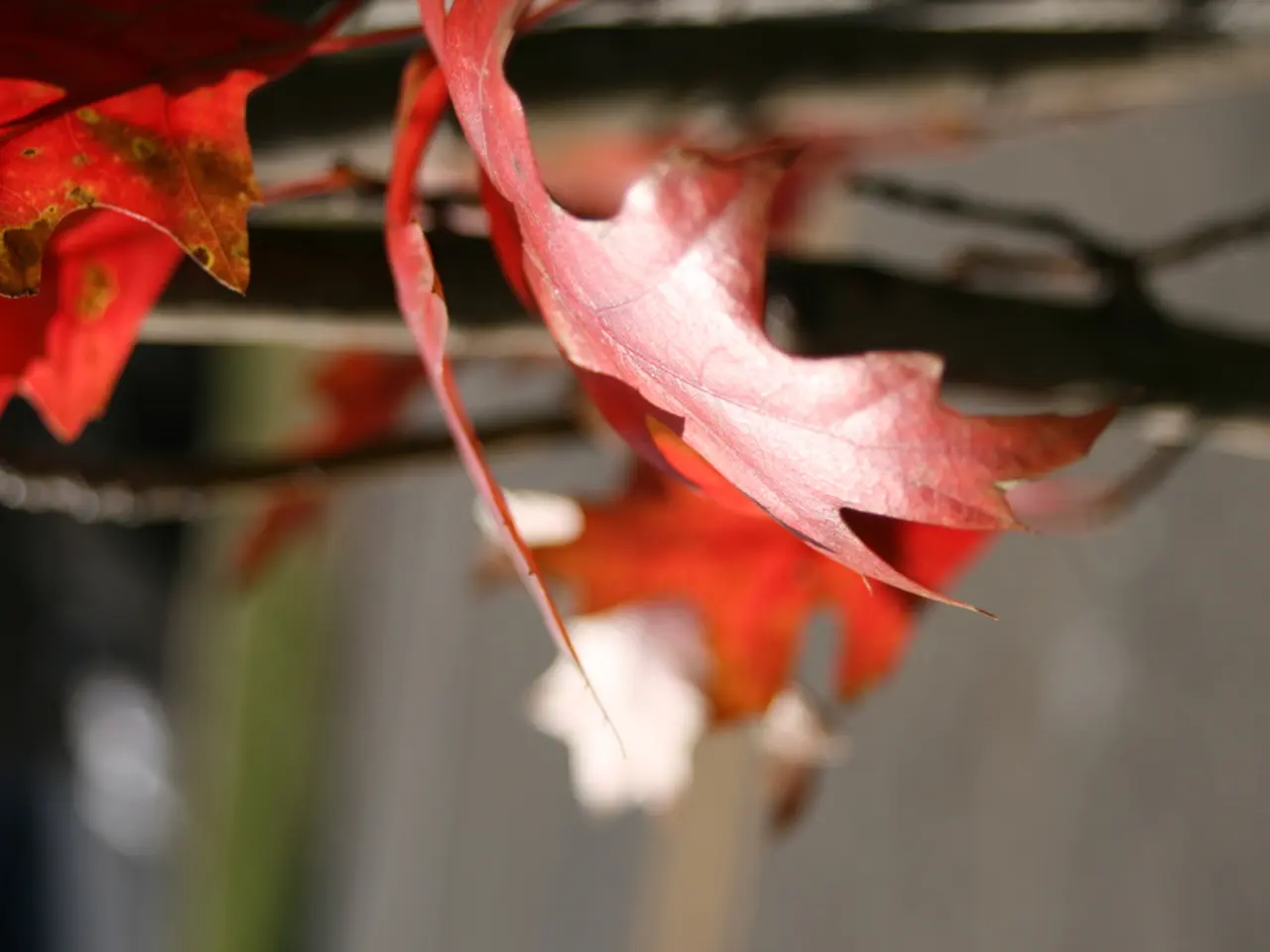
Impacting the Hue of Japanese Maples: Factors Influencing Vibrant Leaves and Your Intervention Options
In the pursuit of maintaining the stunning colours of Japanese maple trees, following a few key strategies can make a significant difference.
Firstly, proper care techniques play a crucial role. Japanese maples require consistent moisture, so deep watering once a week, particularly during dry spells, is recommended to keep leaves vibrant. A thin layer of mulch, such as pine bark, wood chips, garden compost, or leaf mould, can also be applied around the tree to retain moisture and protect against scorching.
Secondly, nutrition is essential for the overall health and colour intensity of these trees. While fertilization cannot change the colour of Japanese maples, a balanced fertilizer can promote health and enhance existing colours. It's important to avoid excessive nitrogen, as it can stress the tree.
Environmental conditions also impact the vibrancy of Japanese maple leaves. These trees generally prefer partial shade, especially in warmer climates, to prevent leaf scorch. They also thrive in slightly acidic to neutral well-draining soil.
Pruning judiciously can help maintain the tree's natural beauty and promote new growth. Light pruning is recommended to maintain shape without causing undue stress to the tree.
By following these guidelines, Japanese maple trees can maintain their vibrant colours throughout the growing season. For example, to prevent brown leaves in summer, it's essential to keep the maple in a part-sun spot, protected from harsh afternoon sun, kept out of the wind, and well-watered during warm spells.
Mulching can help Japanese maple trees retain moisture and prevent leaves from wilting or turning crispy. Feeding these trees with a specialist product like Happy Frog Japanese maple feed can further improve their health and appearance.
Various Japanese maple varieties exhibit unique colours. 'Sango-Kaku' boasts golden yellow leaves that are particularly impressive in autumn, while 'Red Emperor' showcases striking crimson leaves. 'Osakazuki' is hardy, reliable, and brilliant for small trees, thriving on neglect. 'Bloodgood' features deep burgundy leaves, and 'Tamukeyama' has crimson foliage.
It's essential to remember that leaf colour is determined by the tree's genetic code, and Japanese maple trees cannot have their colour changed. However, providing proper watering, mulching, and growing conditions can help promote healthy and vibrant foliage.
Potted maples fare best in a spot with morning sun and afternoon shade. As chlorophyll breaks down in August and September, other colours become visible, making autumn an exciting time to appreciate the vibrant hues of these beautiful trees.
However, brown leaves during summer can be caused by leaf scorch (too much sun or not enough water) or wind damage, particularly near the coast. To avoid this, ensure your maple is in the right environment and is well-cared for.
In cooler zones (zone 5), fall colours of Japanese maples might be bolder following a chilly few weeks in early fall. With the right care, Japanese maple trees can provide an amazing display of colour throughout the year.
Gardening and maintaining a home-and-garden lifestyle can significantly improve the vibrancy of your Japanese maple tree's foliage. Applying a thin layer of mulch around the tree, such as pine bark, wood chips, garden compost, or leaf mould, can help retain moisture and protect against scorching. Additionally, feeding these trees with a specialist product like Happy Frog Japanese maple feed can further improve their health and appearance.