Industries' Leader in Culinary World: Open-Air Catering Enhances Urban Appeal - City ambiance boosted by alfresco dining, according to Dehoga
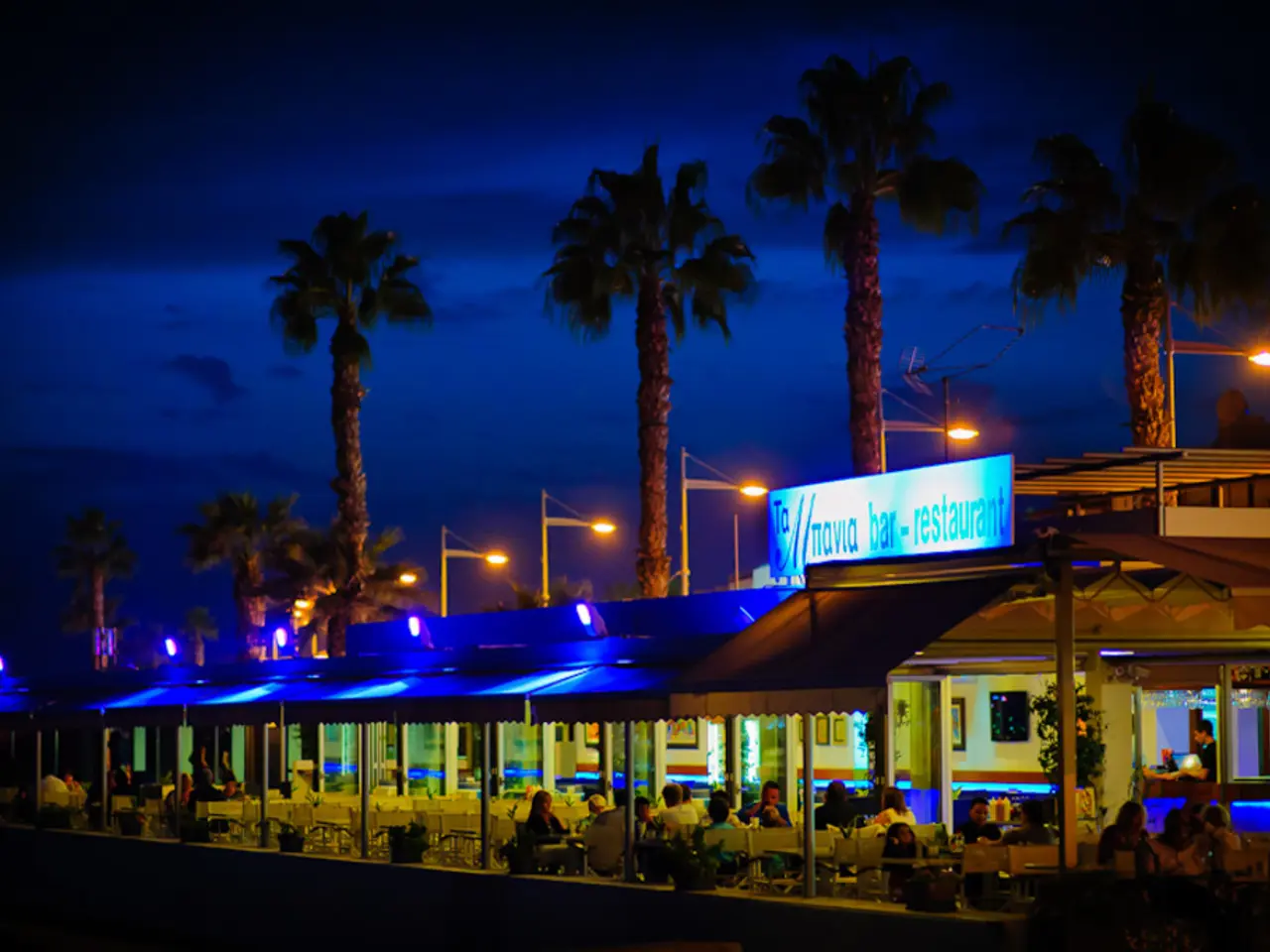
In the picturesque cities of Mecklenburg-Vorpommern, Germany, outdoor dining is becoming an increasingly popular and significant aspect of urban life. With many restaurants and cafes boasting direct views of the water, the region's coastal charm is beautifully reflected in its culinary scene.
One such area experiencing a surge in outdoor dining is Schwerin's Buschstraße, where a high-quality gastronomic mile has developed. The city has contributed to this growth through the design and setup of new city furniture, fostering a vibrant and inviting atmosphere.
The President of the German Hotel and Restaurant Association in Mecklenburg-Vorpommern, Lars Schwarz, advocates for more space for outdoor dining in cities, stating that an active outdoor dining scene contributes to a lively, open-minded city and improves the well-being of its residents. City manager Michael Schröder of Neubrandenburg has already convinced several restaurateurs to operate additional outdoor spaces, especially on the market square and in Turmstraße.
Cities like Schwerin promote outdoor dining by converting streets into pedestrian zones, creating potential for larger outdoor dining areas. In Wismar, seven permits for expanded outdoor dining areas have been granted this year. Rostock has expanded areas for outdoor dining during the corona pandemic and plans to offer more space for outdoor dining in the long term, including in the city harbor.
However, design standards must be met, and other user groups should not be disadvantaged. Reasonable conditions must be provided for restaurateurs to operate outdoor dining spaces. City officials are urged by Schwarz to grant outdoor space, as it benefits the city itself, not just restaurateurs.
In Greifswald and Stralsund, a general expansion of outdoor dining areas is not currently planned, but interested parties can always submit an application for special use. In a dpa survey, Neubrandenburg explicitly wishes for an expansion of outdoor dining. The conversion of Puschkinstraße and adjacent areas in Domstraße and Domhof in Schwerin is likely to add more outdoor dining areas in the future.
According to Birgit Hesse, President of the Tourism Association of Mecklenburg-Vorpommern, restaurants and cafes in cities often have something truly unique to offer. This diversity in outdoor dining options contributes to the attractiveness of urban areas, encouraging both locals and tourists to spend more time in city centers.
In conclusion, while direct studies on the impact of outdoor dining expansion in Mecklenburg-Vorpommern are scarce, it is reasonable to assume that such expansions enhance city attractiveness and well-being by promoting economic activity, social interaction, and urban vibrancy, especially in tourism-driven regions. This aligns with broader observations of how outdoor dining contributes to urban quality of life in similar German regions and beyond.
The community is urged to consider the development of outdoor dining spaces in city centers, as it can contribute to an improvement in city residents' well-being and the overall attractiveness of urban areas. This enhancement could be characterized as a part of lifestyle changes, offering unique food-and-drink experiences in a vibrant, open-minded community setting. In addition, the growth of outdoor dining can Foster home-and-garden-like environments, promoting social interaction and contributing to the development of the fisheries sector through local fishery policy.