Avoid Believing These 11 Common Tomato Misconceptions: Understanding Your Garden's True Requirements
In the world of home gardening, misconceptions about tomato cultivation abound. However, a recent article by Backyard Garden Lover's has shed light on several myths that have been debunked, offering valuable insights for green-fingered enthusiasts.
Firstly, it's essential to dispel the notion that tomato leaves are highly toxic or poisonous to humans. Contrary to popular belief, tomato leaves do contain alkaloids such as tomatine, which have fungicidal and pest-repelling properties. However, these compounds are not harmful to humans in typical quantities, and dried, crushed tomato leaves have even been used as a bittering agent in cooking historically.
Another myth concerns the use of tomato leaf sprays as organic pest controls. These sprays, made by soaking chopped tomato leaves in water to extract tomatine, are effective in controlling aphids and other pests. Furthermore, they pose no toxicity risk to humans, provided you are not allergic to tomatoes.
Other common tomato-growing myths, such as improper staking methods or soil use, can harm growth but are not discussed in the Backyard Garden Lover’s context. However, it is worth noting that staking tomato plants properly and using well-draining soil with the correct pH are critical for healthy growth.
When it comes to harvesting tomatoes, Home Garden Lover's advises that tomatoes that have begun to redden can be picked and allowed to finish indoors, with no taste penalty. Additionally, every tomato can be turned into sauce with the right technique, whether it's Roma and paste types, slicers, or heirlooms.
Blossom-end rot, a common issue in tomato gardening, is more about uneven soil moisture than calcium deficiency. When the soil alternates between dry and soaked, calcium uptake gets disrupted, causing soft spots on fruit. To prevent this, it's crucial to maintain consistent watering.
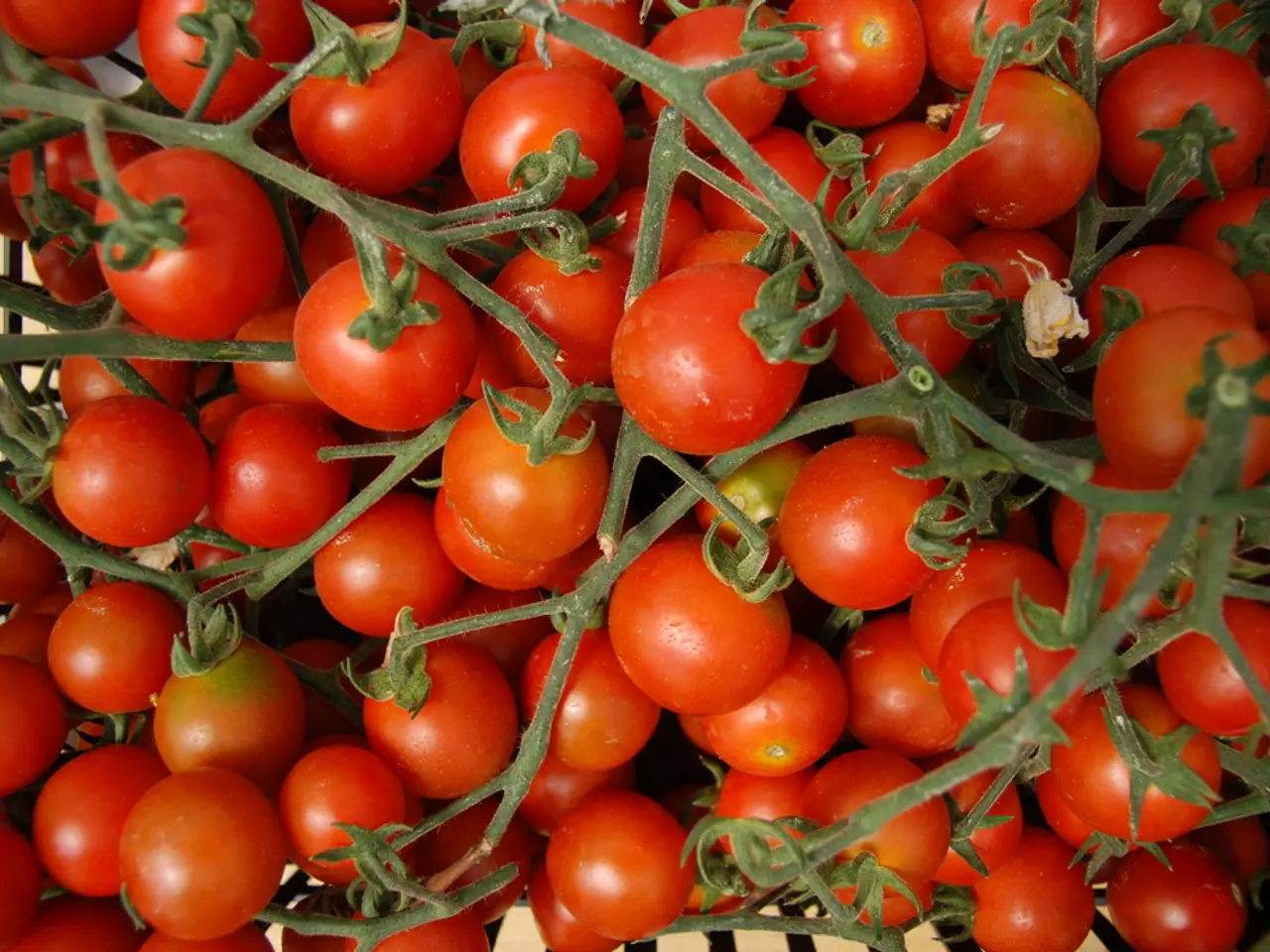
Pruning side shoots (suckers) is not mandatory, but it can lead to bigger, earlier tomatoes and cleaner plants. Alternatively, letting the suckers grow extends the harvest season and adds yield. Cherry tomatoes can also be used in homemade sauce, and storing fully ripe tomatoes in the fridge won't ruin the flavour if eaten soon after.
In terms of watering, tomatoes crave steady water, ideally 1-1.5 inches per week. Tomatoes naturally shed old leaves as they grow, especially those shaded by new growth. Snipping leaves that touch the soil or crowd fruit clusters can help prevent fungal issues and tidy up the plant.
For a light sauce on hot summer days, cherry tomatoes are arguably one of the best tomatoes to use. In a backyard garden, pollinators and breezes do the job of pollinating tomatoes naturally. A gentle shake on a non-windy day can help if pollinators are scarce.
Ultimately, tomato growing doesn't need overthinking. Find what works best for your yard, preferences, and time. Tomatoes don't need full sun to ripen, just enough light for photosynthesis. In fact, constant harsh sun can sunburn fruit. Shaded fruit can still ripen and turn red and sweet.
To preserve texture after refrigerating tomatoes, place them upside-down on the counter. There are no strict rules to tomato growing; embrace consistent watering and ditch the myths to enjoy a bountiful tomato harvest.
- Properly staking tomato plants and using well-draining soil with the correct pH are critical for healthy growth in the world of home gardening.
- Dried, crushed tomato leaves have historically been used as a bittering agent in cooking, debunking the myth that they are highly toxic or poisonous to humans.
- Tomato leaf sprays, made by soaking chopped tomato leaves in water, are effective in controlling pests and pose no toxicity risk to humans, provided there are no allergies to tomatoes.
- In a backyard garden, pollinators and breezes can aid in the natural pollination of tomatoes, with a gentle shake on a non-windy day serving as an alternative if pollinators are scarce.
- For a light sauce on hot summer days, cherry tomatoes are arguably one of the best tomatoes to use, making them suitable for a homemade sauce from a home-and-garden lifestyle.
- To prevent blossom-end rot, caused by uneven soil moisture, it's crucial to maintain consistent watering in the garden, ensuring the optimal growth and harvest of tomatoes and other vegetables.